
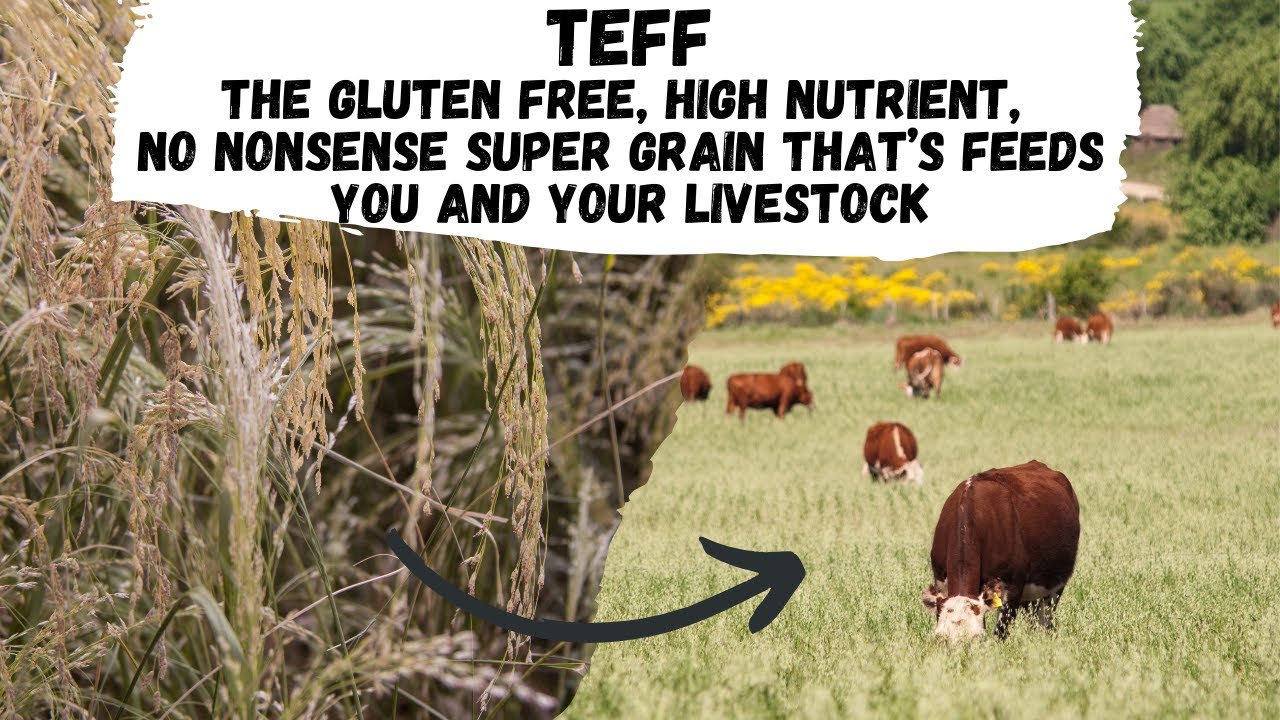
Discover the benefits of Teff, the gluten free super grain packed with nutrients for you and your livestock. Feed your body and animals with this powerhouse grain.
The Mighty Teff: A Nutrient-Packed Super Grain for Both You and Your Livestock
Teff is a gluten-free super grain that is not only beneficial for humans but also for livestock. Packed with nutrients, this versatile grain has become a popular choice in the world of agriculture. Its ability to support regenerative farming practices makes it a sustainable and environmentally friendly option for farmers.
Rich in essential vitamins and minerals, Teff is a great addition to any diet. Its high protein content and complex carbohydrates make it a great source of energy. Whether used for human consumption or as feed for livestock, Teff is a valuable crop that offers numerous health benefits.
As we continue to explore the possibilities of regenerative agriculture, it is clear that grains like Teff play a crucial role in building a more sustainable food system. With its nutrient-dense profile and versatility, Teff is sure to remain a staple in the world of farming for years to come.
Tiny but Mighty: Unleashing the Power of Teff for Healthier Bodies and Happier Livestock
TEF is one of those really old Ancient Grains that’s gotten the Resurgence lately sorghum Pearl Millet and amarit there a few others that you might have heard of too we’ve certainly mentioned Amarth and sorghum plenty of times and millets already on the docket for a future video so hit that subscribe button so you don’t miss it when it.
Comes out think of the big hoo-ha that quinoa caused a few years ago the super grain that could cover just about every nutritional aspect of anyone’s diet right up there with avocado toast and whatever trendy superfood is making the social media rounds at the moment the thing with these super grains is that they steamrolled onto the scene for.
A reason because they usually really are all that everyone says they’re cracked up to be TEF like the ones we just mentioned is one of those grains that sustained entire Civilizations for centuries both for human use and as animal feed we’ll get into the nutritional breakdown a little later in the video but to put it into perspective.
It’s so packed with goodies that most sustenance farmers use teft to make up more than half of their daily food intake seriously this stuff is so rich that it makes up the bulk of Ethiopia’s and arria’s diets and has for hundreds of years 75% of the population’s protein intake comes from their favorite staple the humble grass called TEF here in the.
US it’s become popular because it’s one of the few nutritionally dense flower options that are gluten-free that actually tastes pretty good it’s healthy almost inconceivably easy to grow and yes it’s worth all the hype so let’s get into it where did it come from where is it going and what are the stats and conditions that it needs to set down its.
Roots on your land TEF was one of the first grains to be domesticated around 6,000 years ago originating on the Horn of Africa it’s still the staple food of Ethiopia erria and to a lesser degree Somalia in the last century Ethiopia supplied 90% of the world’s TEF production but given the extreme droughts and the devastating famines.
That nearly wiped out the country completely there was a nationwide ban of the export of TEF during the late ’90s and early 2000s what Little Ethiopia was able to grow during these harsh years was reserved for its own star people and understandably so since then Ethiopia has recovered marvelously and they’re now the second most populated country on.
The continent and they boast one of the fastest growing economies too they opened up their stores for export again years ago but those few years off the market kept TEF hidden in the background for so long that we almost forgot about it the only place where you’d really find te was in horse stables because it’s one of the very few High nutrient.
Grains that our notoriously finicky steeds were capable of eating and that should tell you a lot about it versatility when it comes to feeding your animals if the ultra sensitive horses can eat it then every other animal on your farm can too besides being applicable for every single creature on your land it can make up the.
Bulk of their feed it’s the staple grain that keeps the country fed like we have corn Asia has rice and other parts of Africa have sorghum the Horn of Africa has TEF both for its people and its livestock a recent study done on beef steers in dairy cattle kept the ruminants on 47% TEF with the rest made up of Alfalfa and corn silage and they.
Did fantastic and since the milking cows did so well they used the same mixture on the growing calves and Adolescent bulls that usually need more feed than their adult counterparts and again they fared well their growth and weight gain was right on schedule and there was no discernable difference in any other aspects of their health the studies are.
Being repeated with higher percentages of te to see just how much of their food can be made up of the Grain on its own given its similarities to amarinth we’d expect the numbers to be similar if not better te has higher amounts of Lysine protein and fiber than amarinth or Alfalfa and Alfalfa can make up to 60% of a ruminant feed amarinth is higher in.
These vital nutrients too but it can’t be made into hay limiting its use as a primary feed but TEF can it looks so much like grass that you wouldn’t look at it twice if you saw it growing in the wild te is like other Ancient Grains in all of the positive ways it’s drought and disease resistant and it can grow in downright inhospitable conditions but.
Teft has one distinct Advantage from the rest all of the Ancient Grains need a little water in their beginning stages and then require less and less the more established they get too much water and they become susceptible to disease but not te it can handle rain until its final stages it just doesn’t want the cold that’s all so like the Prairie and.
Savannah grasses even though te is a grain sort it grows like the grasses and with the same amount of care virtually n at all it grows low to the ground barely reaching hip height and the grain Kernels at its end are only 1 mm long but given how densely they can be planted together the small size of the grain doesn’t impact the yield you can.
Get from a single acre there’s no need to bother spacing out your seaing te wants to grow on top of each other the closer They are packed into a single space the better a variant of the love grass species te is the world’s smallest grain and the word TEF Loosely translates to loss probably because the seeds are so tiny that a lot of it was.
Lost to the wind during the process of winnowing by hand in Ethiopia it’s planted at the beginning of the rainy season which starts in June and lasts all the way to the end of September harvesting begins in November and can run into January if it’s left out in the field to the absolute last minute TEF is usually planted well after the other.
Crops are already in the ground since it doesn’t need as much time to grow as long as its early stages of growth gets to be in the rainy season the last half of its cycle is pretty low nonsense and it doesn’t require much pampering TEF grows best at higher elevations with lots of sunshine heat and it’s not strict about the kind of soil that it’s.
Planted in clay sandy lomy or rocky te’s going to do just fine no matter where they are high elevations aren’t absolutely NE necessary they do great at low elevations too we just mentioned that because it’s one of the very few crops at your disposal if you are placed higher up but it’s not made for the cold at all 32° F or 0 CSI has a 100% kill.
Rate this is not a crop that can handle even the lightest Frost TEF was made for the bush the rainforest and even the desert if you’re growing in zones 8 through to 11 it’ll do well or if the soil has heated up to at least 65° after the cold season you can expect 2 tons of yield for every hectare since TEF is so heavily over swn it.
Reduces weed pressure almost completely nor does TEF have any disease that plague it seriously the only thing that’s a danger to Growing te is going to come from the cold or from rodents start investing in cats because rodents love it and deer raccoons and birds aren’t going to pass it up if they come across it either but even with animal.
Pressure in the ideal climate there isn’t going to be much that can put strain on a field the biggest issue with teft that’s keeping it at the bottom end of the world market is its habit of lodging when it comes to harvesting keeping strands from falling flat from the weight can be avoided if it’s planted in rows when te is harvested in.
Ethiopia it’s usually done by hand and with a sickle since most of the country is sustained by subsistence farming done on homesteads and with minimal Machinery you can imagine just how labor intensive this could be and since the seeds are so small and fine there are huge losses when they’re cut down so much that sewing is almost unnecessary since.
Enough grains fall that it replants itself for the next season all on its own when harvested with Machinery these losses are greatly reduced uced but it still brings up the issue of reeding itself you might have wanted another crop in that field and now you can’t possibly plant anything else there since the TEF will outgrow everything else to.
Combat this planning is everything if you harvest just before the cold comes the frost will kill off any Sprouts that had plans to take over the field or you can run chickens through the field afterwards your girls won’t get all of the seeds but they’ll make a big dent in the amounts that dropped the seeds are fine and the stocks grow much lower than.
The grain sorts usually do but there really isn’t that much difference in harvesting preserving or rolling the stocks in Hay Bales you’d approach it exactly like you would wheat sorghum and any other grain or hay crop you can also intercrop te with other grains grasses legumes and ground cover for the purpose of rotational grazing this is the ideal.
Crop to feed your Livestock on a cycle dispersed among other crops they won’t take over the space and it’ll give your animals the absolute best nutritional boost for rotational feed and like the super grain te has a wide range of uses animal feed aside te makes a high nutrient porag or flatbread that’s served with almost every meal since the.
Grain is so small it Cooks through faster than any other grain sort it’s made into Penta and used to thicken soups and stews and when it’s pounded down into flour it’s used just like any other flour would be for baking and it can even make a pretty good gluten-free beer too don’t underestimate these tiny seeds all of those vitamins and minerals.
We mentioned comes out to 250 calories per cup that’s more than most other grains on the market compared to a bowl of Oats you’ll eat less than half the serving worth of oats in TEF before you can’t eat anymore TEF is heavy rich and filling and it can keep you going all day keeping by the standard cup measurement from TEF you’ll get 7 gr of.
Dietary fiber more than any of the gluten-free grains in existence all of the major B vitamins are present and it’s high in Copper zinc manganese and iron Trace Amounts of potassium magnesium and phosphorus are present too but you’re probably more interested in the protein lysine and calcium protein will come in at 4 G per cup 120 Mig of.
Calcium and 4 G of Lysine all higher than Alfalfa and amarinth in short it’s not just going to be a superfood for you it’s going to be a super food for your livestock too California has put a lot more effort into growing TEF for The Culinary and health conscious Market in recent years but we foresee the enormous benefit when it comes to feeding.
Livestock there’s just no way that our animals should be losing out on feed that’s so well-rounded versatile as dry and Fresh Feed or a grass sord that grows so well with others adding TEF to your rotational grazing pastures is going to reduce the the amount of variation and feeds you need in the field greatly it grows quick needs.
Virtually no care and it’s one of the most well-rounded grains we’ve ever covered on this channel as far as fod goes almost no one is intercropping it for the purposes of grazing and why on Earth should they it’s a high time that TEF came out of the Shadows where it’s been hiding all of these centuries it’s more nutritious than the super feed.
Alfalfa and sorghum yet it has a wider range of growing conditions it’s less hassle and it has no enemies there’s no limit to what kind of animal it can feed you included and and it grows right at that sweet spot that everything can reach it from the low and Tiny Chicken all the way up to the large and mighty steer once te begins to creep into.
Rotational grazing it’s going to rise Supreme above all the rest there aren’t any negatives that we can see except that it might just phase out the usual grze and hay crops that we’ve been using all these years it’s cheap it’s easy it’s got all the nutrients you could ask for and it’s high time that it finds a place in your field but what about you.
Have you eaten TEF before if you haven’t there are plenty of eat Ethiopian eating establishments in the US why not give it a try it’s rare enough that a decent gluten-free option comes to light that actually has nutritional value to bring to the very limited list of options that are available for those who have celiac disease or are gluten intolerant or are.
You more interested in its use as a feed for your animals would you prefer to utilize it for grazing purposes or in a more traditional field to process into hay bales and for later feeding outside of the field would you prefer to utilize it for grazing purposes or in a more traditional field to process into hay bales and for later feeding outside of.
The field let us know in the comments below and don’t forget to like share and subscribe we’d like to take a moment to thank our viewers your comments and engagement has given regenerative farmers of America a platform to bring together a healthy and thriving Community where like-minded individuals can come together to discuss their.
Struggles and their successes we couldn’t do this without you and our team members are forever grateful for all of your support so from the RFA team to you thank you keep loving the land and and it’ll love you back tfold see you next week


