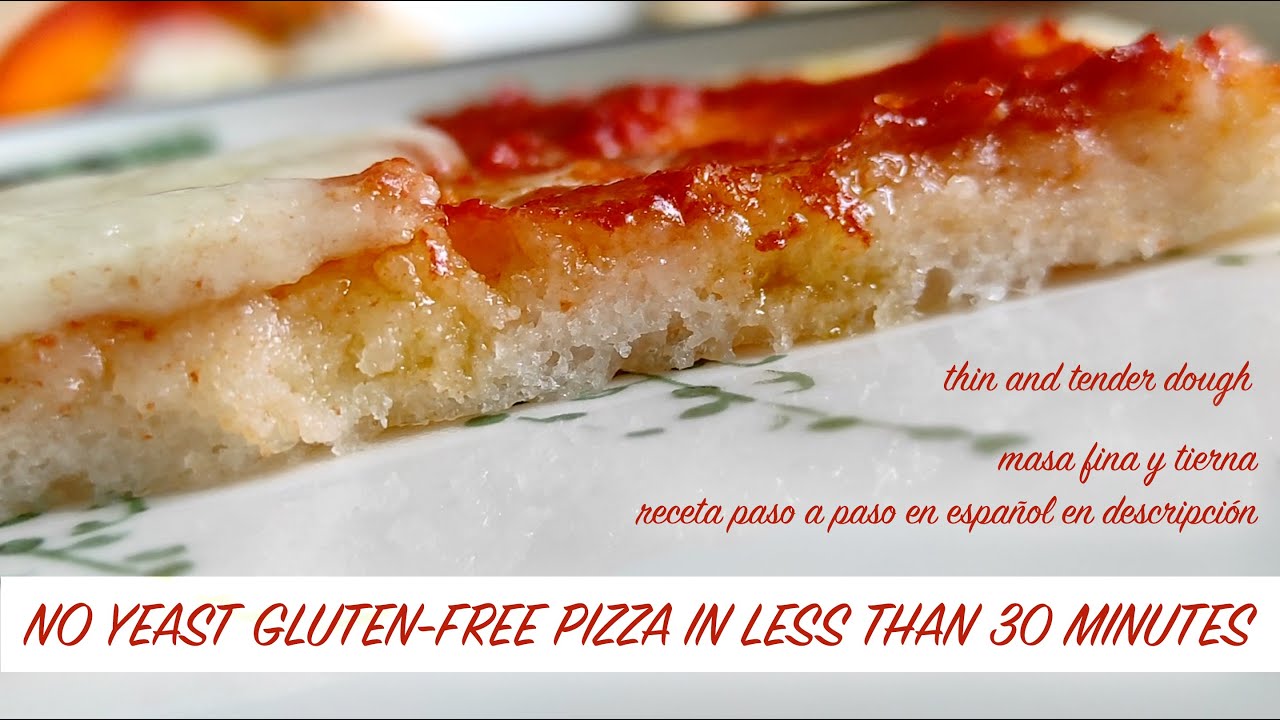
Enjoy a delicious gluten-free pizza without yeast in under 30 minutes! Made with natural ingredients for a quick and healthy meal option.
Quick and Easy Gluten-Free Pizza Recipe with Natural Ingredients 🍕
Looking for a delicious gluten-free pizza recipe? Look no further! This recipe includes a homemade gluten-free crust made with rice flour and potato starch, topped with a flavorful tomato sauce and mozzarella cheese. The crust is easy to make and bake, resulting in a crispy and tasty pizza that everyone will love. Whether you follow a gluten-free diet or just want to try something new, this pizza recipe is a must-try.
The crust is made by mixing rice flour, potato starch, water, olive oil, salt, cream of tartar, baking soda, and apple cider vinegar. The dough is then spread on a baking tray and baked until crispy. Once the crust is ready, top it with tomato sauce and mozzarella cheese, then bake it for a few more minutes until the cheese is melted. The result is a delicious gluten-free pizza that rivals any traditional pizza, perfect for a family dinner or a gathering with friends.
🍕✨ Whip Up a Delicious Gluten-Free Pizza in Just Half an Hour – All-Natural Goodness! 🌱🕒
Leave behind the hassle of yeast and thefrustration of gummy or crumbly textures. In less than 30 minutes, you’ll be sinking yourteeth into a mouthwatering pizza with a soft, pillowy crumb and a crispy crustthat will leave you craving more. In this video tutorial, I’ll shareall the tips and tricks to ensure your pizza turns out delicious andwell baked every time, resembling a traditional one.
Without sacrificingyour time and any bite full of flavor. Before starting the recipe, preheat the oven to 210°C and gatherall the necessary tools and ingredients. This pizza requires a baking tray with a diameterbetween 27 and 29 cm —no larger or smaller, otherwise the pizza won’t bake properly. Line your baking tray with parchment paper to prevent the dough from sticking,.
Ensuring itperfectly follows the edges of the tray. Grease the bottom and then apply the parchment paper. If you use a baking tray with higher edges, which I do not recommend because it would bemore difficult to remove the parchment paper under the pizza, you might need to linethe edges as well to prevent excessive sticking of the crust. I tried bakinga section without lining them entirely, and it didn’t make much of a difference.
Itreally depends on the coating of your baking tray. Your tomato sauce may vary in consistency. Inany case, add 1 tsp of extra virgin olive oil and salt to taste. I found that a quarterof a tsp worked well. Bring the sauce to a boil for a few minutes, then turn off thestove or keep it on very low heat to let the sauce thicken a bit if necessary with theresidual heat.
Keep it warm until you use it. You can use any type of mozzarella cheese, but remember that fresh or light versions have moisture that you’ll need to remove. It’simportant to use low-moisture mozzarella cheese to prevent its water content from flooding the bottomof the pizza, which can cause sticking and loss of crispiness. Here, I’m using the light version,.
And as you can see, it’s releasing some of its water content. This pizza doesn’t absolutelywant unnecessary moisture because the dough is already runny and it bakes very quickly. In case you want to use fresh mozzarella, let it warm up for 30 to 60 seconds insidethe oven while it’s preheating to make it release its water content. Then, put it onto asieve to drain, and keep it close to the oven, at hand and ready to use.
You can use shredded mozzarella; I personally prefer this type because it’sthe one that worked best for this pizza. We start by adding a quarter of a tsp of bakingsoda and half a tsp of cream of tartar to separate bowls. Then, add a bit of room temperaturewater and stir. This will help the two powders integrate quickly with the wet ingredients. In a larger bowl, add 90 g of rice flour, 40 g of potato starch,.
And a quarter of a tspof salt. Create a well in the middle and pour in 130 g of water, 10 g of oil, and whiskuntil all the ingredients are well combined. Next, brush some oil on top of the parchmentpaper inside the baking tray. This will give the pizza more flavor and crispiness and willhelp the parchment paper adhere to the tray.
Proceed with the following steps onlyif the oven has reached the temperature. Add the baking soda, cream of tartar, and halfa tsp of apple cider vinegar into the bowl. They will start to react to each other immediately, andyou will see the batter bubbling. Since you don’t want to lose many of the air bubbles produced, whisk quickly to combine.
And pour the batter into the baking tray. Spread it if necessaryby twisting the tray, then bake it at 210°C for the first 5 minutes, during which you will seethe superficial layer bubbling and stabilizing. After 5 minutes, once stabilized, open theoven door and bring the tray closer to you. Add the tomato sauce on top, spreading itwith a spoon in circular movements from the center towards the edges, and level it.
Here I didn’t covered the entire surface, but I’ll talk about this later. Once done, returnthe pizza to the oven and continue baking it at 200°C for 7-8 minutes, until the tomato sauce ontop becomes thicker. If you use a smaller tray, the pizza will be slightly thicker and willrequire a few more minutes to dry properly. Once done, open the oven again and add themozzarella cheese on top,.
Then bake it for the last 3 minutes. I don’t recommend baking thispizza for more than 15 or 20 minutes, otherwise, it may become too gummy. You may want to turnon the grill function for a bit of browning. Once out of the oven, usea spatula to help you lift the pizza off the tray and the parchment paper. You may have noticed.
That the crust may appearpretty flat and white. This is normal since rice flour is white, and we’re not using theproper ingredients required to replicate the gluten function. However, you can improvethis aesthetic issue by spreading the tomato sauce over the entire surface instead ofleaving the crust without topping. Doing so will give a nice color to the pizza andmake it look more like a traditional one.
Here’s the pizza that I baked using a 27cm size tray, spreading the tomato sauce all over the surface and using shreddedmozzarella. These two ingredients made a difference and worked great to improve theappearance. I believe that at first glance, nobody would ever be able to discern that this pizza is gluten-free, baked in just 15 minutes and without yeast.
Thisone is slightly thicker, so remember that it may take a few minutes more to dry. Everythingdepends on your oven and the way it bakes. Anyway, all things considered, both pizzas lookincredible and perfectly baked. The thinner pizza is a bit more bubbly, and I preferred it tothe thicker one, as less dough helps enhance and bring out all the flavors of the toppingswith each bite.
They resemble the softness of a Neapolitan pizza, though without the crust, butwith crispness included. This makes these pizzas much more than decent and acceptable —indeed, agreat yummy alternative for a last-minute meal. The last tip I want to give you is touse a serving dish that always fits the size of your pizza and is flat. Thisdish was a bit smaller and shallower, which made the pizza deform and the crust crack.
Well, it may seem like a lot of informationto take in, but I can guarantee you that once you become familiar with all the steps andingredients, you’ll find yourself making this last-minute pizza very often becauseit’s really easy and quick. I promise! I hope you enjoyed this video, and if you did, don’t forget to like and share, leave acomment, consider subscribing, and hit the bell to receive notifications!.
Thanksfor watching, and I’ll see you next time!